 Batanes Philippines Tours
Things to Do in Batanes: Every Stop on the Four Islands
Last reviewed August 2026
Things to do in Batanes divide neatly by island, because that is how the tours divide. North Batan is a half day around Basco, South Batan is a full day on the coast road, Sabtang is a full day around a morning boat, and Itbayat is a separate two-day trip to the top of the Philippines. This page lists what is actually on each route, the stops the operators name, and which listing reaches them.
Quick answer
The four islands hold four distinct days. North Batan: Basco Lighthouse, Vayang Rolling Hills, Valugan Boulder Beach and the PAGASA ridge. South Batan: Racuh a Payaman, the Honesty Coffee Shop, the House of Dakay and Alapad. Sabtang: the Savidug and Chavayan stone villages, Chamantad-Tinyan and the Ahaw arch. Itbayat: Torongan Cliff, the Secret Arch and sunrise at Rapang. The 3-day package covers the first three for $96.79.
Key takeaways
- Three touring days covers every headline sight on Batan and Sabtang
- Itbayat is a separate two-day trip and the first thing weather cancels
- The Sabtang boat runs once a morning. How the crossing works
- Everyone pays PHP 405 to enter the province now. What that involves
- Bring cash: the Honesty Coffee Shop only works if you have notes and coins
- Every stop above sits on one of the compared routes
The Tours That Reach Them
Every stop below sits on one of these routes. Prices read from the booking platforms in August 2026, and exclude flights, accommodation and the provincial visitor fee.
3-Day Batanes Package: North Batan, Sabtang & South Batan
The cheapest way to cover all three standard routes. Day 1 runs 12:00–18:00 on North Batan, day 2 leaves at 05:30 for the Sabtang boat, day…
- Cancellation
- Free cancellation 48h
- Operator
- an operator the listing does not name (reviewers name Chanpan Tours)
Batanes: South Batan Signature Guided Tour
The most detailed South Batan itinerary of the listings compared here — eleven stops written out in order, including the Honesty Coffee Shop, the 1880s House…
- Cancellation
- Free cancellation 24h
- Operator
- Sarah Lea Travel and Tours Inc.
Batanes: Sabtang Island Scenic & Adventure Tour
The fullest Sabtang stop list compared here, and the only one that names the Savidug idjang fortress viewpoint, the Chamantad–Tinyan view deck and the Ahaw arch…
- Cancellation
- Free cancellation 24h
- Operator
- Sarah Lea Travel and Tours Inc.
Batanes: 2-Day Itbayat Island Tour with Meals
Itbayat is the northernmost inhabited island in the Philippines and the crossing is a long open-sea boat ride, so this trip is weather-dependent by nature. Two…
- Cancellation
- Free cancellation 24h
- Operator
- Gladex Travel and Tours Corp.
North Batan: the Half Day Around Basco
Compact, close to town, and the route every multi-day package puts on the afternoon you land.
The hills and the lighthouse
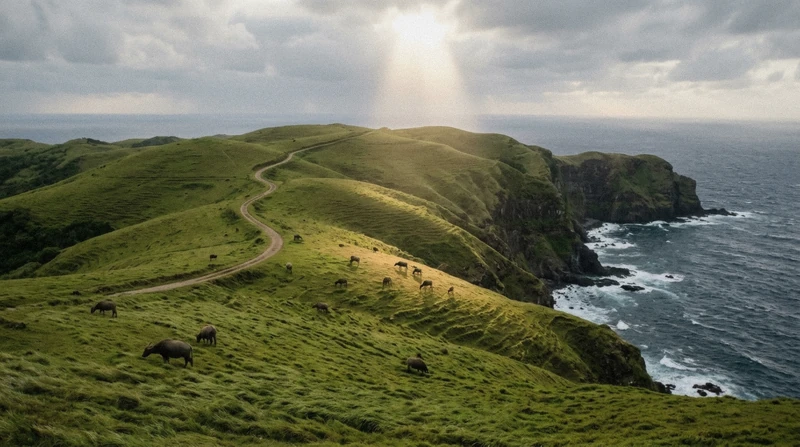
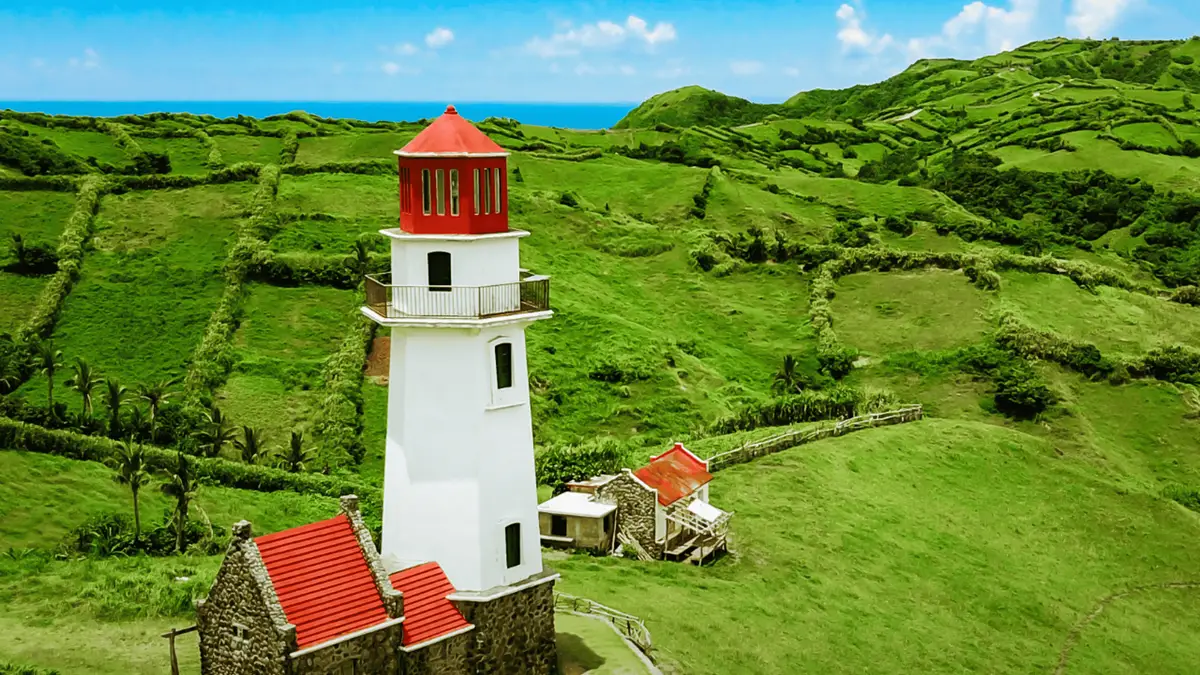
Vayang Rolling Hills is the one that sells the province: open grazing land west of Basco dropping to the sea, with Mount Iraya behind. Naidi Hills carries Basco Lighthouse on the headland above the town, and the view from it takes in the whole north coast.
Both are late-afternoon stops on the standard route, because that is when the light works and because flights land at midday.
Valugan Boulder Beach
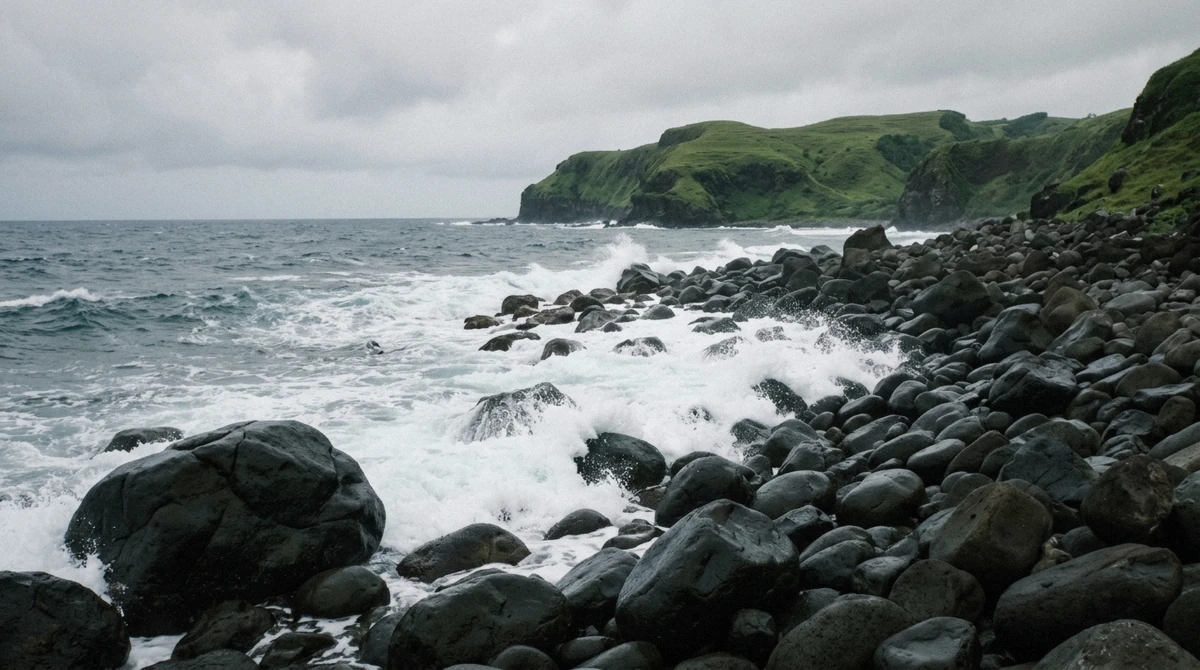
A shore of dark andesite boulders on the Pacific side, thrown down by Mount Iraya and rounded by decades of surf. There is no sand at all, which surprises people expecting a beach.
It is one of the few places in the Philippines where the Pacific arrives with nothing between you and it.
The ridge: PAGASA, Tukon Chapel and Fundacion Pacita
The PAGASA weather radar station sits on the ridge above Basco with Tukon Chapel, also called Mt. Carmel Chapel, beside it, built in Ivatan stone. It is the highest easily reached viewpoint on Batan.
Fundacion Pacita, the former home of the artist Pacita Abad turned lodge, sits on its own hilltop nearby and appears as a viewpoint stop on the 2-day package route. It is also the one luxury property in the province if you want to stay in it.
The tunnel, the cathedral and the idjang
The Dipnaysupuan Japanese Tunnel is a hillside network dug during the Second World War, with a lookout at the top. Basco Cathedral, Our Lady of the Immaculate Conception, the first church in Batanes, sits in the town proper alongside the provincial capitol.
The Basco idjang viewpoint, named on the two-day route, looks toward one of the pre-colonial Ivatan hill fortresses that also appear on Sabtang.
Mount Iraya, and why nobody sells a climb
Mount Iraya is the dormant volcano behind Basco, 1,009 metres, and it is the reason Valugan Boulder Beach is made of andesite rather than sand. It appears in the background of nearly every North Batan photograph.
None of the eight listings compared on this site climbs it. Batanes tourism is built around road routes and one boat crossing, not around trekking, and the standard circuit treats Iraya as scenery. If a summit day matters to you, that is arranged locally with a guide rather than booked online, and it is not something to plan a trip around given how often the weather closes in.
South Batan: the Coast Road
The long day, and the one with the heritage on it. Every South Batan listing draws from the same set of stops.
Racuh a Payaman, better known as Marlboro Country
Communal pastureland that rolls to a cliff edge above the Pacific, with cattle and carabao grazing loose across it. It appears on every South Batan itinerary compared on this site, and it is the single image most associated with the province.
It is exposed and the wind never stops. A hat without a chin strap will not survive the walk to the edge.
The heritage stops
San Carlos Borromeo Church in Mahatao is a declared National Cultural Treasure, built in classic Ivatan stone, with a centuries-old Spanish-era registry book kept on its grounds. The House of Dakay is one of the oldest surviving Ivatan stone houses, built in the 1880s and still standing through every typhoon since. The Old Spanish Bridge still carries the road.
The Honesty Coffee Shop in Ivana is the one people remember: an unstaffed store where you take what you want and leave the money in a box. It works because people pay. Carry coins.
All four are named in the running order of the South Batan signature tour; the cheaper Gladex day tour names five headline stops instead.
The coast
Chawa View Deck opens most South Batan routes, with a staircase down toward the water. The Mahatao boat shelter port is a stone harbour built to hide fishing boats from the wind. The Homoron Blue Lagoon is a rock-bounded natural pool, and White Beach is the sand beside it.
The Alapad Rock Formation is the cut where the road threads between wind-carved slabs, marked by the old "Blow Ur Horn" sign, one of the most photographed stretches of road in the country. The Motchong viewpoint, San Lorenzo Ruiz Chapel, Ivana lighthouse and the Blank Book archive fill in the rest.
Why the coast road takes a whole day
South Batan looks small on a map, Basco to Uyugan and back is not a long distance, but the road is a cliff road for most of its length, winding between the sea and the hills, and the stops are spaced along it rather than clustered. Every listing compared on this site gives it a full day, from 09:00 to 17:00 on the packages and eight hours on the signature tour.
That pacing is also why lunch is inside almost every South Batan price. There is very little on the route where you can improvise a meal, and the towns you pass through, Mahatao, Ivana, Uyugan, are small enough that a restaurant stop is arranged rather than found.
The one exception in the listings compared here is the signature tour, which covers the vehicle, guide and every entrance fee but does not list lunch. That is the trade for its eleven published stops.
| Island | Time needed | Headline stops | Reached by |
|---|---|---|---|
| North Batan | Half day | Vayang Rolling Hills, Basco Lighthouse, Valugan Boulder Beach | Road from Basco |
| South Batan | Full day | Racuh a Payaman, Honesty Coffee Shop, House of Dakay, Alapad | Coast road south |
| Sabtang | Full day | Savidug, Chavayan, Chamantad-Tinyan, the Ahaw arch | Morning faluwa from Ivana Port |
| Itbayat | Two days | Torongan Cliff, the Secret Arch, sunrise at Rapang | Open-sea boat from Basco Port |
Sabtang: the Heritage Island
A full day, reached by one morning boat, and worth arranging the rest of the trip around.
The villages
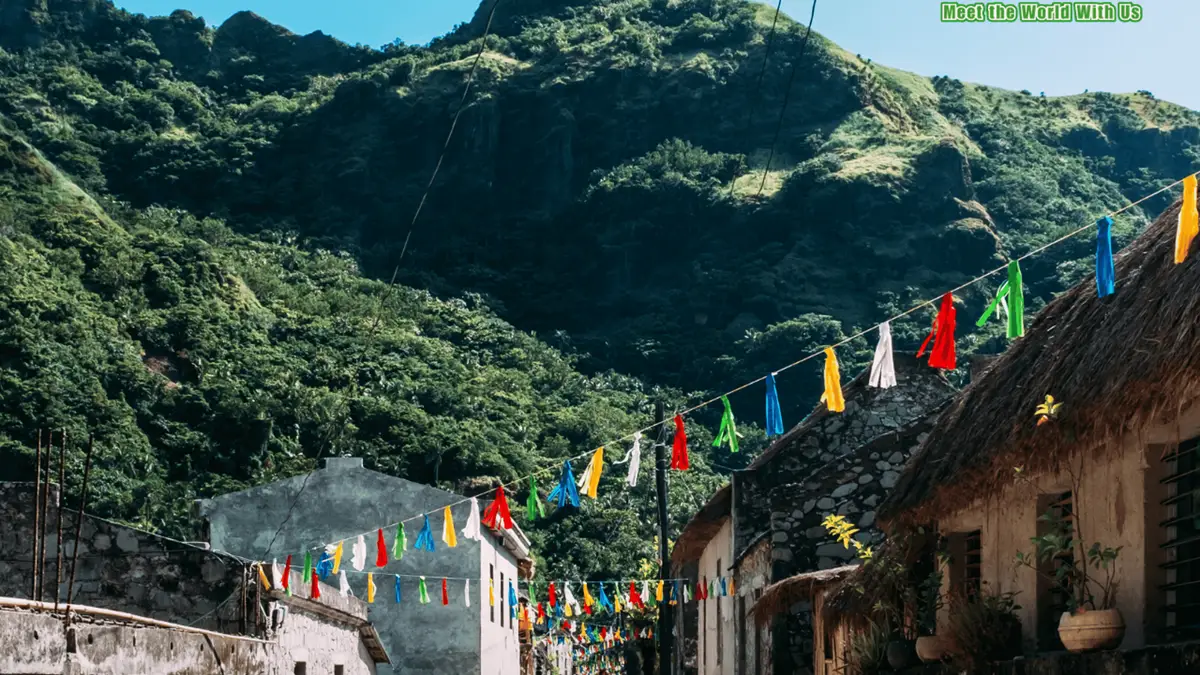
Savidug and Chavayan are the two heritage villages: rows of Ivatan stone houses with metre-thick lime-and-stone walls under cogon-grass roofs, still lived in. Chavayan is the best-preserved traditional village in Batanes and the place where the vakul and kanayi headgear is still woven by hand from stripped voyavoy palm fibre.
The Sto. Tomas de Aquinas Chapel stands in Savidug and the Sta. Rosa de Lima Chapel in Chavayan; San Vicente Ferrer Church is at the port where you land.
The views and the fortress
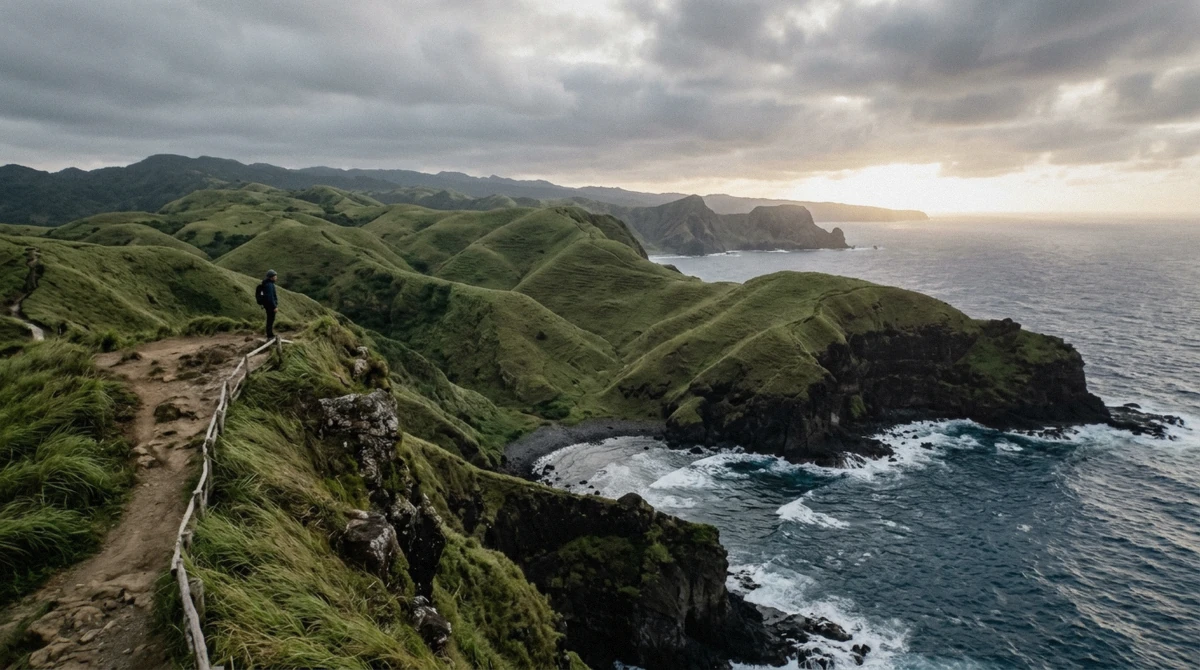
The Chamantad-Tinyan View Deck looks over hills folding into a cove on the Pacific side, the photograph that appears whenever Sabtang is written about. Nakabuang Beach at Morong has white sand and the Ahaw natural stone arch standing at the waterline.
The Savidug idjang is an ancient Ivatan hill fortress on elevated ground, predating the Spanish period, viewed from a designated viewpoint on the scenic and adventure tour. The Malakadang lighthouse and Mayahao round out the standard list.
The full Sabtang guide covers the crossing and the timings.
Itbayat: the Far North
A separate two-day trip, an open-sea crossing, and nothing else in the Philippines that looks like it.
What is there
Torongan Cliff and Hills, where the listing points out stone boat-shaped burial grounds and historical markers of early Ivatan settlement, oral history places the first landfall in the islands here. The Aruis Tree at Tachimus Port. Kavaywan Lake, Mauyen Cliff, the Secret Arch and Chinapoliran Port. A trek up Mt. Karoboboan, and sunset at Paganaman Port.
Day two is a pre-dawn hike to Rapang for sunrise over Rapang Cliff and Hills, the Stonebell and the Rock Garden, a field of wind-sculpted coral limestone.
Why it is a second trip
Itbayat is a raised coral island with no beach landing; boats come alongside rock. The crossing from Basco Port to Valanga Port is long, fully exposed open sea and the most weather-dependent leg in the province, the independent fare alone is about PHP 450 one way against roughly PHP 100 for the Sabtang faluwa.
The 2-day tour at $256 includes the boat both ways, a van, a guide, a fan room and meals, and states it is not suitable for anyone with vertigo or mobility impairments. Nobody should build a first Batanes trip around it.
The islands nobody visits
Batanes has ten islands and only three carry any tourism: Batan, Sabtang and Itbayat. The rest, among them Y'ami, Mavulis and Siayan at the very top of the archipelago, closer to Taiwan than to the Philippine mainland, are uninhabited or hold only military and coastguard presence, and there is no visitor route to them.
That is worth knowing because the province's marketing sometimes implies more than the tour listings deliver. Everything bookable online, on any platform, happens on those three islands. If a Batanes itinerary promises you the northernmost point of the Philippines, read it carefully.
The Things That Are Not Sights
Half of what makes Batanes worth the flight does not appear on a stop list.
The wind and the architecture
Batanes is about 230 square kilometres, the smallest province in the Philippines by land area, with the lowest population, and it is called the Home of the Winds. That is not branding, it is the design brief for everything built here.
The stone houses, the cogon roofs, the vakul headgear, the stone boat shelter at Mahatao: all of it is an answer to weather that arrives from the north with nothing in the way. Once you have noticed that, the stop list starts reading as one continuous thing rather than a series of photo spots.
The idjang, and what was here before the Spanish
Two of the stops on the standard circuit, the Basco idjang viewpoint on North Batan and the Savidug idjang on Sabtang, point at the same thing: fortified settlements built on rock outcrops and defensible high ground, occupied by Ivatan communities long before the Spanish arrived in the archipelago.
They are the reason the islands read as older than their churches. The stone architecture that visitors photograph in Savidug and Chavayan is Spanish-era in form, but the pattern of living on defensible ground with the sea on three sides is much older than that. On Itbayat, Torongan Cliff carries stone boat-shaped burial grounds and historical markers that Ivatan oral history connects to the first landfall in the islands.
No tour compared on this site climbs an idjang; they are viewed from designated viewpoints. That is a preservation decision rather than a logistical one.
The food
Ivatan cuisine is its own thing: lunis, pork slow-cooked and preserved in its own fat; uvud balls made from banana pith; whatever the boats brought in that morning. Most tours compared here include lunch, and reviewers of the packages that do single it out.
The South Batan tour with lunch names it explicitly; the signature tour on the same coast does not list lunch at all.
The honesty economy
The Honesty Coffee Shop is the famous example, but the principle runs wider. It is a province where the crime rate is close to nothing and the culture around it is a point of local pride.
Respect it in the practical ways: pay at the box, keep to the paths in the villages, ask before photographing people, do not fly a drone, the 4-day package bans them outright, and remember that public smoking is prohibited across Batanes.
What it costs to see all of it
The three standard routes come as a 3-day package at $96.79 per person, with lunch on every touring day and the Sabtang boat included. Single days run $115 to $162; the Itbayat trip is $256; the four-day package is $331.
On top of any of them: PHP 405 per person for the provincial registration, PHP 100 for the Ivana LEAH fee, and the flight, roughly PHP 4,000 to PHP 15,000 return, which is the real cost of a Batanes trip. The full budget.
Things to Do in Batanes: Questions
What is Batanes famous for?
Rolling communal pastureland running to sea cliffs, Racuh a Payaman, better known as Marlboro Country, and the Ivatan stone villages of Sabtang, where houses of metre-thick lime and stone under cogon roofs are still lived in. It is the smallest province in the Philippines by land area, about 230 square kilometres, and it is called the Home of the Winds.
What are the tourist spots in Batanes?
On North Batan: Basco Lighthouse, Vayang Rolling Hills, Valugan Boulder Beach, the PAGASA radar and Tukon Chapel, the Dipnaysupuan tunnel. On South Batan: Racuh a Payaman, Chawa View Deck, San Carlos Borromeo Church, the House of Dakay, the Honesty Coffee Shop and Alapad. On Sabtang: Savidug, Chavayan, Chamantad-Tinyan and the Ahaw arch. On Itbayat: Torongan, the Secret Arch and Rapang.
Is Batanes worth visiting?
If you can give it three touring days, yes, the flight is the expensive part and it is wasted on a rushed trip. Three days at $96.79 covers all three standard routes on top of a flight of roughly PHP 4,000 to PHP 15,000 return. One day does not justify the airfare. How many days you need.
How many days is enough in Batanes?
Three touring days covers North Batan, South Batan and Sabtang. Five days on the ground is the local recommendation, because it absorbs a cancelled boat or a delayed flight. Add two more if you want Itbayat.
Why are Batanes so expensive?
Because Basco Airport has one runway that cannot be extended, so seat capacity is capped and return fares run roughly PHP 4,000 to PHP 15,000. On the ground, Batanes is ordinary Philippine pricing, tours from $56.29 and rooms from about PHP 1,200 a night for two. More on flights.
Can I see the sights without a tour?
You can rent a tricycle or motorcycle, reported rates are about PHP 1,000 for North Batan, PHP 1,500 for South Batan and PHP 800 on Sabtang, for two. But the provincial registration portal now asks every visitor to name a Department of Tourism-accredited tour operator, and Sabtang still means buying the boat and the island fee yourself.